Showing posts with label culture. Show all posts

Monday, April 30, 2012

New world poetry for Día 2012

In honor of El día de los niños/El día de los libros/ Children's day/Book Day today, I'd like to highlight three books from outside the U.S.

Argueta, Jorge. 2012. Guacamole; Un poema para cocinar/ A Cooking Poem. Ill. by Margarita Sada. Toronto: Groundwood.

From the publisher, Groundwood Books: "Jorge Argueta’s third book in our bilingual cooking poem series is — Guacamole — with very cute, imaginative illustrations by Margarita Sada.

Guacamole originated in Mexico with the Aztecs and has long been popular in North America, especially in recent years due to the many health benefits of avocados. This version of the recipe is easy to make, calling for just avocados, limes, cilantro and salt. A little girl dons her apron, singing and dancing around the kitchen as she shows us what to do. Poet Jorge Argueta sees beauty, magic and fun in everything around him — avocados are like green precious stones, salt falls like rain, cilantro looks like a little tree and the spoon that scoops the avocado from its skin is like a tractor.

As in the previous cooking poems, Guacamole conveys the pleasure of making something delicious and healthy to eat for people you really love. A great book for families to enjoy together."

Here is the cutest book trailer for Guacamole complete with a foot-tapping song to enjoy!


Be sure to check out his other bilingual "food" poetry collections:
Argueta, Jorge. 2009. Sopa de frijoles/ Bean Soup. Ill. by Rafael Yockteng. Toronto, ON: Groundwood.
Argueta, Jorge. 2010. Arroz con leche; Rice Pudding. Ill. by Fernando Vilela. Toronto, ON: Groundwood.


Luján, Jorge. 2012. Con el sol en los ojos/ With the Sun in My Eyes. Ill. by Morteza Zahedi. Toronto: Groundwood.

From Groundwood: "In this book of short poems in Spanish and English, a young boy and girl describe their world and their day-to-day experiences -- the boy's street is like the trunk of an almond tree and the newborn chicks are like tiny walking suns. The girl loves her dog Oliver, the wind hitting her in the face and laughter "that explodes for no reason." But the children also ponder mysteries, such as the loud silence the boy hears inside himself when he goes for a walk alone and the vast beauty of the sky, with its clouds and constellations.

Once again Jorge Luján brings young readers a lyrical and joyful collection of poems. Morteza Zahedi's powerful illustrations in densely saturated colors perfectly complement the poems' subtle explorations."


I Saw a Peacock with a Fiery Tail. Ill. by Ramsingh Urveti. 2012. London: Tara Books.

From Tara Books: "A well-known folk poem from 17th century England, 'I Saw a Peacock with a Fiery Tail' is a form of trick verse. The poem at first seems nonsensical, but given a break in the middle of each line begins to make perfect sense.

In this pioneering visual exploration of I Saw a Peacock, Gond tribal artist Ramsingh Urveti and book designer Jonathan Yamakami use art and design in the service of language. Working together, revealing and concealing, they brilliantly mirror the shifting ways in which poetry creates meaning."

This book is truly exquisite in art, design, and construction-- but it's also elegant and simple and kid-friendly. The lines of the poem curl this way and that through multiple pages across the blue-black-white palette of the die cut pages.

It begins:

I saw a peacock with a fiery tail
I saw a blazing comet drop down hail
I saw a cloud with ivy circled around
I saw a sturdy oak creep on the ground

Get it? The playful nature of the lines and how they are tucked into the art beg for repeated examination. The thick pages cut with holes and curves and stars offers a tactile experience that takes the simple poem to another level. It's hard to describe adequately, so I urge you to get your own copy, share it with a 10 year old you love, and see what happens. It's the best paper "app" you'll find this year-- read it multiple times, backwards and forwards, talking about the lines, the art, the pages, and making up your own imitation poems!


Happy El día de los niños/El día de los libros/ Children's day/Book Day one and all!


P.S.
And I've already highlighted the following collection in the 5Q interview series-- it also includes a global selection of poets:

Hoyte, Carol-Ann and Roemer, Heidi Bee. Eds. 2012. And the Crowd Goes Wild!: A Global Gathering of Sports Poems. Ill. by Kevin Sylvester. Neche, ND: Friesens Press.


Image credit: 

Groundwood, Tara Books

Posting by Sylvia M. Vardell © 2012. All rights reserved.

Friday, February 24, 2012

Global poetry on the NBGS list

Karen Hildebrand, Chair of the 2012 Notable Books for a Global Society award committee, just gave me the heads up on their latest list which includes several poetry books among the 25 winners.

Requiem - Paul B. Janeczko
Roots and Blues
- Arnold Adoff

Peaceful Pieces
- Anna Grossnickle Hines

Inside Out & Back Again
- Thanhha Lai

Under the Mesquite
- Guadalupe Garcia McCall

Never Forgotten
- Patricia C. McKissack

Alicia Alonso; Prima Ballerina
- Carmen T. Bernier-Grand


FYI: Annually, a committee of the CL/R SIG (Children’s Literature and Reading Special Interest Group) of the International Reading Association selects 25 outstanding trade books for enhancing student understanding of people and cultures throughout the world. The committee reviews books representing all genres intended for students K-12. The new list for 2012 should be posted here soon.

Be sure to catch all the Poetry Friday action this week at Check it Out!

Image credit: 

IRA

Posting by Sylvia M. Vardell © 2012. All rights reserved.

Wednesday, April 27, 2011

ONE, TWO, BUCKLE MY SHOE by Salina Yoon


Poetry Tag continues with a book review of a new book of poetry connected to yesterday's book review.

Today’s tagline: More poems from the oral tradition

Guest Reviewer: Sharon McCoy Johnson

Featured Book: Yoon, Salina, 2011. One, Two, Buckle My Shoe: A Counting Nursery Rhyme. New York: Robin Corey Books, Random House. ISBN 978-0-375-86479-7

Sharon writes: One, Two, Buckle My Shoe: A Counting Nursery Rhyme by Salina Yoon is an imaginative and entertaining counting rhyme book. This durable board book is suitable for babies, toddlers, pre-school children, as well as the young at heart! Yoon offers the reader an interactive, practical and creative literacy learning tool presented with a colorful and exciting contemporary flare on a beloved children’s nursery rhyme. The poet presents the reader with a fun-filled way of recognizing and learning number words and numerals from one to ten.

As the reader turns the pages of the die-cut peek-a-boo windows, the subsequent page will reveal an extravaganza of brightly colored abstract shapes and whimsical circus animals. Further, the child will observe the rhyme’s numeric amount along with the rhyming text given in black or white print. The final pages of the board book offers the reader a double gatefold spread of a three-ring circus spotlighting the good fat hen.

One, Two, Buckle My Shoe is an exceptional counting nursery rhyme board book that is a wonderful resource for a child’s early numeric learning experience.

Connections
Read the nursery rhyme, "One, Two, Buckle My Shoe: A Counting Nursery Rhyme" by Salina Yoon several times in a shared reading lesson with students in early childhood through kindergarten. The teacher will talk with the students about the number words in the board book. The teacher will explain to the students that a number means an amount. The teacher will show the students examples of number amounts written as a number word. The teacher will explain to the students that the number word has the same meaning, only it is written in word format. The teacher will ask the children to create a list of numbers and their number words with a partner.

Tell the pupils that next to each number, they are to write the number word. When needed, children may refer back to the nursery rhyme. Finally, the teacher will show the children the number words again. The teacher will model the correct formation of the number on a small sticky note or the white board and place the number above the word on the nursery rhyme book.

For the second activity, the students will create a graph using cut-outs of ten columns of shoes. The teacher will make copies of shoes for each student. The teacher will write each digit on an index card and the number words, one-ten, on the back of each index card and laminate. The teacher will explain to the students that they are going to randomly draw a number, count the shoe(s) and color it in. For example, the student draws the number “1” and colors one shoe. The student flips the card over, to find the word "one", and writes it in the column beneath (this makes the game self-correcting, and teaches them that a graph has labels). Last, the student sets the number “1” card aside. Continue in this manner until the graph is complete with numbers 1-10. To read more about the counting nursery rhyme, access the following website.

Tomorrow’s tagline: About capturing songs and stories

[We’re heading down the homestretch of National Poetry Month—still time to get your copy of the e-book, PoetryTagTime, an e-book with 30 poems, all connected, by 30 poets, downloadable at Amazon for your Kindle or Kindle app for your computer, iPad or phone for only 99 cents. Grab it now.]

Image credit: PoetryTagTime;

Posting (not poem) by Sylvia M. Vardell and students © 2011. All rights reserved.

Tuesday, April 26, 2011

CANTABA LA RANA by Rita Rosa Ruesga


Poetry Tag continues with a book review of a new book of poetry connected to yesterday's book review.

Today’s tagline: More poems with a Spanish connection

Guest Reviewer: Lydia Rogers

Featured Book: Ruesga, Rita Rosa. 2011. Cantaba la rana/The Frog Was Singing. Ill. by Soledad Sebastián. Scholastic. ISBN: 9780545273572

Lydia writes: CANTABA LA RANA, THE FROG WAS SINGING is a tribute to the poetry that most Hispanic children have heard at least once in their lives. Even English speakers will enjoy these much-loved Spanish nursery rhymes from Latin America as Rita Rosa Ruesga has mainstreamed the poetry by translating each poem. A surprising quality to each poem is that a musical tune that accompanies it. The reader can feel the beat embedded in each poem as they read it in Spanish or English.

The illustrations by Soledad Sebastián are in step with art typical of Latin America. Each piece of art for enhances every poem with vivid tones of red, green, purple and blue. The pictures are significant enough to hang as art in a classroom, library or home.

Here’s a sample poem (in Spanish and English):

Señora Santana ~ Mrs. Santana

Señora Santana, por que llora el niño
¿por una manzana?
que se ha perdido.
yo le daré una,
yo daré dos,
una para el niño
y otro para vos.

Dear Mrs. Santana,
Why is the child crying?
Because of an apple,
I think he just lost it.
I will give him one,
I will give him two,
One is for the boy,
The other one’s for you.

Connections
This poem starts off with crying and ends with a smile. Any student will feel the natural connection and fall into a rhythm as they clap, chant, or sing this tune. So, ¡Grab your maracas! Or collaborate with the music teacher; she/he can help you get the tune to this well loved lullaby from Spain. Your K-2 students will appreciate the poem even more if you act it out with them and all share an apple treat in the end. Students in grades 3-5 will identify with the idea of being kind and why that is important in daily life. (They should get some apple too as a reminder to be helpful and kind.)

Tomorrow’s tagline: More poems from the oral tradition

[We’re heading down the homestretch of National Poetry Month—still time to get your copy of the e-book, PoetryTagTime, an e-book with 30 poems, all connected, by 30 poets, downloadable at Amazon for your Kindle or Kindle app for your computer, iPad or phone for only 99 cents. Grab it now.]

Image credit: PoetryTagTime; Scholastic

Posting (not poem) by Sylvia M. Vardell and students © 2011. All rights reserved.

Monday, April 25, 2011

HURRICANE DANCERS by Margarita Engle


Poetry Tag continues with a book review of a new book of poetry connected to yesterday's book review.

Today’s tagline: A novel in verse about coping with cultural differences

Guest Reviewer: Debra Lindenburg-Morrow

Featured Book: Engle, Margarita. 2011. Hurricane dancers: The first Caribbean pirate shipwreck. New York: Henry Holt. ISBN: 9780805092400.

Debra writes: Margarita Engle wrote a very high quality tale about a Spanish pirate named Bernardo de Talavera, his slave named Quebrado and a hostage named Alonso de Ojeda. All three were left to swim for shore when a hurricane destroyed their ship. The slave, Quebrado, was a very smart young man who spoke two languages (Taino and Spanish) and this knowledge ultimately helped to save his life when he found a Ciboney Indian tribe on this new-found island. The pirate, Bernardo de Talavera, and his hostage, Alonso de Ojeda, were not so fortunate because they did not speak nor understand the language of the island natives.

Ultimately, Quebrado decides the fate of these two men by warning the island natives about the dangers these two men pose. Quebrado befriends a Ciboney fisherman named Narido and is captivated by the beauty of a young Ciboney woman named Caucubu. The story takes some twists and turns that will keep the reader engaged.

Engle did a good presentation of poetic free verse for each of her characters and the reader will be able to recognize the tone and rhythm of each character while reading their verses. An interesting aspect of the story is the historical setting which is sure to attract history enthusiasts of any age. Great book and compelling story that should be in every library’s collection!


Excerpt:


"Quebrado"


The hurricane

falls silent.


We step out of the cave,


and find masses


of writhing sea things

that look like snakes,

moons, flowers

and stars....


The Woman of the Wind

taught all these creatures

how to fly.


What will the hurricane


teach me?


Connections
This is a great poem to introduce children to the power of mother nature and how one can turn a weather event into poetic form. I would ask children to journal about a weather event they experienced or viewed on television and write a short poetic verse reflecting the power of such an event.

Tomorrow’s tagline: More poems with a Spanish connection

[We’re heading down the homestretch of National Poetry Month—still time to get your copy of the e-book, PoetryTagTime, an e-book with 30 poems, all connected, by 30 poets, downloadable at Amazon for your Kindle or Kindle app for your computer, iPad or phone for only 99 cents. Grab it now.]


Image credit: PoetryTagTime; Macmillan

Posting (not poem) by Sylvia M. Vardell and students © 2011. All rights reserved.

Sunday, April 24, 2011

INSIDE OUT AND BACK AGAIN by Thanhha Lai


Poetry Tag continues with a book review of a new book of poetry connected to yesterday's book review.

Today’s tagline: A novel in verse about a painful truth

Featured Book: Lai, Thanhha. 2011. Inside Out and Back Again. HarperCollins.

What a powerful debut work from new voice Thanhha Lai. It’s a loosely autobiographical work about her own experience as a refugee from Vietnam in the 1970s. The 10-year-old heroine of this taut novel in verse, Hà, narrates the story which is broken into 4 sections:

Part I Saigon
Part II At Sea
Part III Alabama
Part IV From Now On

Each section offers a well-developed whole with a strong sense of place unique to each—life in Vietnam, surviving on a refugee boat, transplanting in an Alabama town. (The fourth and final section is still set in Alabama, but represents a clear shift in the emotional resolution.) The transition between each place occurs quickly (as it would in reality) and offers the reader a strong sense of the displacement and constant re-orientation that the characters experience. This also provides a framework for a fast-moving plot that keeps the reader turning the page and wondering how the family will cope with each new challenge.

Amidst all this upheaval, Lai also manages to carve out distinct characterizations of Hà and each member of her family, including her resilient mother and each of her three brothers. Even characters in the “new” environment (sponsor, teacher, neighbor) emerge as multi-dimensional individuals. Our protagonist is often the least sympathetic character—rebellious, insecure, somewhat selfish—but her honest observations manage to be touching, poignant, and often hilarious while balancing the tightrope of authentic child voice and reliable story narrator. Consider the opening poem that pushes the story into motion.

1975: Year of the Cat

Today is Tết,
the first day
of the lunar calendar.

Every Tết
we eat sugary lotus seeds
and glutinous rice cakes.
We wear all new clothes,
even underneath.

Mother warns
how we act today
foretells the whole year.

Everyone must smile
no matter how we feel.

No one can sweep,
for why sweep away hope?

No one can splash water,

for why splash away joy?

Today
we all gain one year in age,
no matter the date we were born.
Tết, our New Year’s,
doubles as everyone’s birthday.

Now I am ten, learning
to embroider circular stitiches,
to calculate fractions into percentages,
to nurse my papaya tree to bear many fruits.

But last night I pouted
when Mother insisted
one of my brothers
must rise first
this morning
to bless our house
because only male feet
can bring luck.

An old, angry knot
expanded in my throat.

I decided
to wake before dawn
and tap my big toe
to the tile floor
first.

Not even Mother,
sleeping beside me, knew.

February 11
Tết

(pp. 1-3)

I love how culturally specific this verse novel is with plenty of details about the rituals, beliefs, foods, names, and attitudes within Vietnamese culture, while offering many universals that cross cultures and draw the reader in (troublesome brothers, being teased, learning new things). Lai does not shy away from including harsh difficulties and sadness, as well as offering hope that grows out of the characters’ strengths and love.

I also really appreciate the Spartan, spare nature of Lai’s poetry. What is not said is as critical as what is. And her use of titles to begin her entries and “date stamps” to end them is so well conceived and effective.

Young readers who may be unfamiliar with this period will simply see this as a believable story about moving, adjusting, and growing up. Older readers (and grown up readers like me who remember those times vividly) will also be fascinated by the tectonic shift the characters experience in culture, religion, expectations, roles, and relationships. Set in 1975, the book rings true today as new groups of refugees cope with war, camps, relocation, language learning, and cultural adjustment across the globe.

Connections
I felt a very personal connection reminded of my own parents leaving Germany after WW2, choosing between Australia and the U.S. for their new home, waiting for sponsorship, traveling by boat, arriving broke, learning the language, and making their way slowly, but surely. In her “Author’s Note” concluding the verse novel, Lai concludes, “I also hope after you finish this book that you sit close to someone you love and implore that person to tell and tell and tell their story” (p. 262). In her dedication she acknowledges “To the millions of refugees in the world, may you each find a home”—what an invitation for kids to look for ways to welcome others in their immediate environment who may be eager for a friendly gesture and kind word.

Tomorrow’s tagline: A novel in verse about coping with cultural differences

We’re heading down the homestretch of National Poetry Month—still time to get your copy of the e-book, PoetryTagTime, an e-book with 30 poems, all connected, by 30 poets, downloadable at Amazon for your Kindle or Kindle app for your computer, iPad or phone for only 99 cents. Grab it now.]

Image credit: PoetryTagTime; HarperCollins

Posting (not poem) by Sylvia M. Vardell and students © 2011. All rights reserved.

Saturday, April 16, 2011

REQUIEM by Paul B. Janeczko


Poetry Tag continues with a book review of a new book of poetry connected to yesterday's book review.

Today’s tagline: More poems about history

Guest Reviewer: Debbie Owen

Featured Book: Janeczko, Paul B. 2011. Requiem: Poems of the Terezin Ghetto. Cambridge, MA: Candlewick Press. ISBN 978-0-7636-4727-8.

Debbie writes: In this small, but powerful book, poet Paul B. Janeczko gives readers a haunting look into the lives of Jews imprisoned in the Terezin Concentration Camp. Terezin was proudly hailed by Hitler as a sanctuary for artistic Jews. As proof of this refuge, The Red Cross was allowed to tour the camp. Janeczko chronicles this visit in the poem titled “SS Lieutenant Theodor Lang” found below.

Though most of the characters in Janeczko's poems are fictional, the poems were informed by research and based on historical events and facts. Janeczko uses the “Author's Note” to inform readers on factual aspects of his book. Though not completed yet in this ARC, there is a section reserved at the back of the book for “English Translations of Foreign Words”. Janeczko also provides readers with additional resources such as books, websites, and DVD's. Artwork found at Terezin after the war is distributed throughout. These dramatic black and white drawings are a testament to the atrocities experienced by the Jews. In this advance copy, all artwork is not yet finalized.

Paul B. Janeczko provides readers with a moving, lyrical view into the hearts of the imprisoned men, women, and children of Terezin Ghetto as well as German soldiers. It's this look into the perspective of German soldiers that makes Janeczko's Requiem: Poems of the Terezin Ghetto one of the more unique books on Holocaust poetry.

Highlighted Poem (excerpt) from Requiem: Poems of the Terezin Ghetto

SS Lieutenant Theodor Lang
“Because of the meddlesome king of Denmark
we were forced
to allow
Red Cross inspectors to visit our town.
We had months to prepare
our show, a charade
to show them that there was no truth
to the pesky rumors about how
we treated our Jews.”

The poem details the preparations for the Red Cross visit, and yet, ends with the chilling truth:

“The inspectors
were in our town for a short time,
only long enough to see
what we wanted them to see.
No more.
They saw enough
to know that we were treating the Jews
in a civilized and humane manner.
We waited a few months
to resume the transports.
The town was getting crowded
and the ovens of Auschwitz waited.”

Connections
Teachers could use this poem in a study of the propaganda used during WWII and Hitler's use of it for the express purpose of covering up the systematic slaughter of millions of Jewish citizens.

Tomorrow’s tagline: Poetry that offers hope

[We’re now more than halfway through Poetry Month—still time to grab a copy of PoetryTagTime, an e-book with 30 poems, all connected, by 30 poets, all connected and downloadable right now at Amazon for your Kindle or Kindle app for your computer, iPad or phone. Just 99 cents.]

Image credit: Candlewick; PoetryTagTime

Posting (not poem) by Sylvia M. Vardell and students © 2011. All rights reserved.

Friday, April 15, 2011

THE GREAT MIGRATION by Eloise Greenfield


Poetry Tag continues with a book review of a new book of poetry connected to yesterday's book review.

Today’s tagline: More poems about African American history

Featured Book: Greenfield, Eloise. 2011. The Great Migration: Journey to the North. Ill. by Jan Spivey Gilchrist. Amistad/HarperCollins.

This new poetry picture book from NCTE Poetry Award winner, Eloise Greenfield, is a very personal work with a powerful, historic reach. She opens the book with a one-page narrative explaining the meaning of "the Great Migration," the mass movement of African Americans from the southern part of the U.S. to the North between 1915 and 1930. She situates her own family and her own "migration" in this context and the final poems weaves in details of her own family's story. Her frequent illustrator, Jan Spivey Gilchrist, has a similar story-- also noted-- and I wondered if some of the images of people (particularly their faces) were drawn from her or Greenfield's own family trees. Possibly!

This is an interesting use of poetry to convey a chronological history with key poems numbered and titled as follows:

I. The News
II. Goodbyes (Man; Girl and Boy; Woman; Very Young Woman)
III. The Trip (5 page stanzas)
IV. Question (Men and Women)
V. Up North

ending with:

My Family

Greenfield uses free verse, but sets up a structure that gives each poem reading a strong rhythm. Here's the opening poem as one example:

I. The News
by Eloise Greenfield

They read about it, heard
about it, in letters and newspapers
sent down from the North,
from visiting cousins and brothers
and aunts: there were jobs up there,
nice houses, no Ku Klux Klan
everywhere you turn, burning down
schools and homes and hope.
They thought about it, talked about it,
spread the word. "Did you hear the news?
Can it really be true? Well, I'm going
to see. How about you?"

Gilchrist's illustrations incorporate watercolor along with collage to blend scenes of landscape and personal portraits (often faces "lifted" from actual photographs), many set against a stark, black page. Thus, most of the poems appear in white text against a dark or black background for an even greater visual and symbolic impact. The combined effect of art that suggests real people along with a strong voice throughout the poem (often named) lends itself to reading aloud or dramatic performance.

Connections
Greenfield provides a "Selected Bibliography" at the conclusion of her book listing other books about this subject that you may want to consult. Kids may want to conduct community interviews to investigate the experiences of "migrating" families in their area. Discuss the similarities and differences between "migrants" and "immigrants" then and now.

Tomorrow’s tagline: More poems about history

[We’re halfway through Poetry Month—still time to grab a copy of PoetryTagTime, an e-book with 30 poems, all connected, by 30 poets, all connected and downloadable right now at Amazon for your Kindle or Kindle app for your computer, iPad or phone. Just 99 cents.]

Image credit: HarperCollins; PoetryTagTime

Posting (not poem) by Sylvia M. Vardell and students © 2011. All rights reserved.

Thursday, April 14, 2011

ROOTS AND BLUES by Arnold Adoff


Poetry Tag continues with a book review of a new book of poetry connected to yesterday's book review.

Today’s tagline: Poems about another pair

Guest Reviewer: Deanne May

Featured Book: Adoff, Arnold. 2011. Roots and Blues; A Celebration. Clarion. ISBN: 978-0-547-23554-7

Deanne writes: In Roots and Blues: A Celebration, Arnold Adoff explores the evolution of blues music in African American culture as well as its impact on singers and listeners. Beginning with the songs of those being transported from Africa across the ocean during the slave trade and ending with blues music in modern times, Adoff uses lyrical poetry to engulf readers with the pure emotion of this genre of music.

Adding visual beauty to Adoff’s words are R. Gregory Christie’s enchanting acrylic paintings. The rhythm and flow of the poems in Roots and Blues allows for a smooth reading while evoking sensory images through the use of rich vocabulary. Perhaps the most interesting element of this book is the unique layout in which special attention was paid to spacing, line breaks, and the placement of the poems on the page. Readers will enjoy this historically rich exploration of how blues music came to be.

Connections
Due to its complex vocabulary and, at times, abstract nature, Roots and Blues: A Celebration would be best suited for use with high school aged students and beyond. Though one usually associates use of poetry with Language Arts curriculum, Roots and Blues would make for an excellent teaching tool in any music or music history class. This book represents the history of blues music in a historically accurate, yet emotionally riveting manner. Roots and Blues could provide an engaging alternative to reading a traditional textbook about the same topic. To explore the use of blues music in African American culture during various points in history, educators can select poems that represent each time frame being studied. For example:

Slave Trade (taken from p. 10)

Chained
in rags in blood in dark death of daylight.
To survive the passage across the ocean from
life to living hell to life in hell means
silent
singing
of old

songs.
Behind the eyes

the fingers strum
homeland strings and memory of my history

remains as strong as steel.

Always: this melody of words is journey home.


Tomorrow’s tagline: More poems about African American history

[You can still purchase your own copy of PoetryTagTime, an e-book with 30 poems, all connected, by 30 poets, all connected and downloadable right now at Amazon for your Kindle or Kindle app for your computer, iPad or phone. Just 99 cents. Don’t miss it.]

Image credit: Clarion; PoetryTagTime

Posting (not poem) by Sylvia M. Vardell and students © 2011. All rights reserved.

Friday, January 21, 2011

Margarita Engle in BOOK LINKS, plus

I’d like to plug the January issue of Book Links (now an ancillary publication with Booklist) and my “Everyday Poetry” column about poet and author Margarita Engle. This time last year in Book Links, Jeannine Atkins offered a fine introduction to three books by Margarita Engle-- The Poet Slave of Cuba, The Surrender Tree, and Tropical Secrets including research suggestions for the classroom. In my column, I followed up with more info and curricular connections. Here’s an excerpt:

Margarita Engle burst onto the scene only 5 years ago and has already garnered multiple Pura Belpre recognitions (another one THIS year!) and a Newbery honor distinction. Her work thus far is a unique amalgamation of spare and powerful free verse, unheralded historical subjects, vividly realized settings, and multiple contradictory points of view. She has fused history, poetry, and biography to tell authentic stories about real people from the past. Her work lends itself to cross-curricular applications in history, science, and language arts, in particular.

Her unique style provides opportunities for young people to connect with her work in a variety of ways. The use of many viewpoints lends itself to dramatic reading ala readers theater. (Her first three works are also available in audiobook form.) Her use of imagery and distinctive settings begs for artistic interpretation in drawing, painting, collage, etc. The history and geography nuggets may prompt further digging into nonfiction and web-based resources. Put it all together and students can create digital trailers using archival photos, period music, and evocative voiceovers to bring her works to life.

So far, Engle has authored five novels in verse beginning with The Poet Slave of Cuba: A Biography of Juan Francisco Manzano, illustrated by Sean Qualls. The life of nineteenth-century Cuban slave Juan Francisco Manzano is portrayed from multiple points of view in this complex and gritty poetry-story. Pair this book with other stories of enslaved peoples in studying the history of the Americas. It offers interesting parallels to Marilyn Nelson’s Fortune’s Bones or M. T. Anderson’s two The Astonishing Life of Octavian Nothing novels for older readers.

Her verse “biography,” The Surrender Tree, features Cuba’s legendary healer Rosa la Bayamesa, told from multiple points of view during several wars for Cuba’s independence in the 1850-1899. It is a compelling narrative of escape and hiding, heroism and healing set in the lush landscape of Cuba’s jungles and caves across three wars fought by natives and fueled by outsiders. It offers an interesting counterpoint to books about the Civil War in the U.S during this same period, such as the classic Bull Run by Paul Fleischman, also told from multiple viewpoints or J. Patrick Lewis’s poetry collection, The Brother’s War: Civil War Voices in Verse.

In Tropical Secrets: Holocaust Refugees in Cuba, Engle shifts to Cuba in 1939 and the contrasting, interweaving paths of a Jewish boy who is a refugee from Germany and a daughter of a corrupt Cuban official and their growing awareness of the conflicted, adult world. Follow up with other stories about refugees such as the popular Swedish novel, The Faraway Island by Annika Thor, translated by Linda Schenk, or the memoir in verse, The Year of Goodbyes by Debbie Levy, or the picture book, Brothers in Hope: The Story of the Lost Boys of Sudan by Mary Williams, or the contemporary nonfiction work, Children of War, Voices of Iraqi Refugees by Deborah Ellis.

Next up: The Firefly Letters; A Suffragette's Journey to Cuba, based on the diaries and letters of Swedish suffragist Fredrika Bremer. It is set in 1851 and is built upon three female perspectives: a Swedish feminist, a slave from the Congo, and a privileged Cuban girl, weaving together notions of freedom and choice, culture and family. Engle’s focus on the roles of girls and women against a backdrop of cultural expectations and economic limitations parallels many of the struggles in another novel in verse, Crossing Stones by Helen Frost and for older readers, the novel Climbing the Stairs by Padma Venkatraman.

Margarita has a new book coming out this year, another historical novel set in Cuba—but going further back several hundred years. In Hurricane Dancers, The First Caribbean Pirate Shipwreck, set in the early 1500’s, Engle’s protagonist is Quebrado, named by the sailors, el quebrado—half islander, half outsider, “a broken one,” a child of a Taíno mother and Spanish father. He navigates the “words and worlds” between his mother’s Taíno Indian language and his father’s Spanish after a devastating hurricane and shipwreck. Michael Dorris’ historical fiction novel, Morning Girl, is set in this same time period, also in a Taíno village and offers another interesting native perspective. Or look for factual informational books about hurricanes like Hurricanes by Seymour Simon or for more poetry by poets of the Caribbean such as Monica Gunning, Lynn Joseph and James Berry.

Conclusion
What a powerful poetic voice, inspiring Latina writer, and distinctive ambassador for Cuba’s history. A “poet unit” focused on the works of Margarita Engle will yield a model of rigorous research, sensory description, elements of memoir, mastery of perspective, and elegant writing. Her treatment of the “true story” is eloquent and engaging, balancing the rigors of researching primary sources with the gift for telling a gripping story—all with a poet’s heart.

MARGARITA’S NOVELS IN VERSE
Engle, Margaret. 2006. The Poet Slave of Cuba: A Biography of Juan Francisco Manzano. New York: Holt.
Engle, Margarita. 2008. The Surrender Tree. New York: Holt.
Engle, Margarita. 2009. Tropical Secrets: Holocaust Refugees in Cuba. New York: Holt.
Engle, Margarita. 2010. The Firefly Letters; A Suffragette's Journey to Cuba. Henry Holt.
Engle, Margarita. 2011. Hurricane Dancers; The First Caribbean Pirate Shipwreck. Henry Holt.

FREE POEM
Be sure to check out this January issue of Book Links which also includes a previously unpublished poem by Margarita, free for teacher and librarian use. The accompanying poem, “Quietly,” is a lovely tribute to her mother and her mother’s influence on Margarita’s own memories.

MINI INTERVIEW QUESTIONS
Margarita was kind enough to respond to several interview questions as I was working on this article. I think you’ll find her answers fascinating!

SV: You seem to be drawn to the stories of “real” people from history. Why do you choose to tell their stories in poetry, rather than prose? Do you also rely on exhaustive research to get your details correct? Can you describe your research process?

---Margarita: I am haunted by stories about people who make hopeful decisions in situations that seem hopeless. The verse novel form allows me to distill complex historical situations down to their emotional essence. I need to learn the facts and figures of history, but I don’t want to clutter my books with information. My goal is an uncrowded page that flows easily and quickly, without intimidating reluctant readers.

Researching real people and historical events requires obscure references. I start with recent publications, and work my way back in time by searching for references listed in bibliographies. When I find a diary, I feel like I’ve won a prize, because first person accounts offer emotional aspects along with the details of daily life. Since rare books are not usually available in a digital form, I depend on interlibrary loan, an amazing service that gives me access to University collections and the Library of Congress.

SV: Conditions of war and armed conflict are often an important part of your books. What parallels do you see across those historical events (and today)?

---Margarita: Peace is the attraction, not war. I exist in the space between two hostile countries, Cuba and the U.S., so the interface between cultures fascinates me. In Hurricane Dancers, I wrote about the first encounter between my Cuban Indian ancestors and my Caribbean pirate ancestors. I hope my books offer empathy. The Poet Slave of Cuba is about the injustice of slavery and the yearning for literacy. The Surrender Tree shows a small country’s desire for independence from powerful nations. Tropical Secrets is about the plight of refugees. The Firefly Letters portrays women who are regarded as property. These are all ongoing situations throughout the world. They are topics that are relevant today.

SV: Presenting multiple points of view seems to be a hallmark of your works. How do you choose and balance those perspectives?

---Margarita: Giving voices to characters I admire feels natural, but it’s a struggle to let the ones I detest have their say. When I wrote The Surrender Tree, I really didn’t want to let the slave hunter speak. I had to force myself to write his voice, but he was part of the story, so it had to be done. I’m currently working on a shorter novel in verse with only one voice, inspired by stories my grandmother told me about her childhood. She struggled with dyslexia, so I am dedicating the book to reluctant readers. Also, my picture book, Summer Birds, uses a single voice. I think it is a function of the complexity of the story.

SV: You create such a pungent sense of place in your writing with flora and fauna, food and landscape coming vividly to life. Is that an intentional counterpoint to the vivid description of war, death, and disease you also portray?

---Margarita: I’m an agronomist and botanist, as well as a hiker and birdwatcher. I love the outdoors. I love wilderness. I can’t imagine writing in any other way. Tropical landscapes are constantly bursting with life and death. Everything grows fast, and everything rots. It’s a setting filled with fragrance and stench. It can only be described with all five senses on high alert. Your question about counterpoint is interesting, because for centuries, Cuban writers have portrayed a striking blend of natural beauty and moral corruption. It may seem surrealistic, but it’s actually a completely realistic image of life in the tropics.

SV: Several of your characters serve as translators in their stories and language plays a pivotal role in the characters’ relationships. Would you care to elaborate on the why and how of that element?

---Margarita: My parents met, fell in love, and got married without speaking the same language. I was born and raised in my father’s hometown of Los Angeles, but my Cuban mother taught me Spanish while I was little, and when we spent summers in Cuba, I was immersed in Spanish. Growing up bilingual was a formative experience. I am always aware of the different ways of thinking that come with a language. For instance, in Spanish we say we dream ‘with’ someone, instead of dreaming ‘about’ them. In English we say we ‘fly’ from coast to coast, but in Spanish people can’t fly. They have to ‘go by airplane.’ Language is a magic window. It lets you glimpse the human mind.

Wow, right?


I can’t wait to see what Margarita writes next…

And be sure to stop by Tara's for the Poetry Friday gathering at A Teaching Life.

Image credit: 

schoollibraryjournal.com;wppl.org;piedmon.k12.ca;jacketflap.com;tower.com;usmacmillan; freepicturesfreepictures.com

Posting by Sylvia M. Vardell © 2011. All rights reserved.

Monday, November 15, 2010

Pat Mora responds

Thank you, Readers, for your comments and questions for our guest poets. Pat Mora has offered her responses here below. (I'll share Jame's later this week.)

Question from Andromeda Jazmon

I wish I could be there with you at NCTE! It is going to be great. I am wondering about ideas for using bilingual Spanish/English picture books in our library. We are developing our collection in this area. We teach Spanish from Pre-K to 8th grade, but most teachers don't speak it and neither do I. I am working with the Spanish teacher for collaborative ideas using tech tools like the SMARTboard and interactive websites or apps. Do you have any ideas? We have looked on YouTube and read books together. What else could we be doing? How does a monolingual librarian promote bilingual books?

Response from Pat Mora
Your question is about such an important issue. Most teachers and librarians are not bilingual. The number of bilingual students in our schools keep growing. I wrote a series of four easy reads, MY FAMILY-MI FAMILIA, when a foundation director made me aware that such books aren't that available. Last year I asked teachers at an IRA session how they felt about bilingual books. I encouraged them to be candid, and I'm grateful to the teacher who said, "They intimidate me." Here's our challenge. Many of our students need to see themselves in books and delight in seeing their home language in books, and yet many educators are reluctant to buy or use the books. Dive in! Display the books prominently letting students know that you value such books. Find a Spanish speaking partner (a parent, an older student, a college student) to join you in some paired reading. As I say in ZING, educators are powerful people. The books you promote affect the student's opinions of those books.


Comment from Elizabeth

Thanks for your post. I am a former middle and high school English teacher (and NCTE member!), currently staying at home with my 3 young children. I ran across a Pat Mora children's poetry book today when volunteering in our lower school library. Loved it and tonight found your blog through an internet search. I loved your interview with her and her comments about creating quiet and needing the stillness to explore. Those quotes really resonated with me. Thanks for sharing.

Response from Pat Mora
Thanks for your comment, Elizabeth. The years that I was home with my three
children are among the happiest years of my life.

Question from Laura Purdie Salas
Pat is so delightful--a joy in person (so fun to read right after you at TLA this year, Pat, even if you did have everyone, including me, in tears...a tough act to follow) and on the page.

I'm rereading Dizzy in Your Eyes right now, and I'd love to know more about your poetry process on an individual poem.

The poem "Kissing," where the father sees the daughter and her boyfriend kissing and is upset about it is one of my favorites in Dizzy. Could you share a bit about the process of writing that poem or any other single poem from Dizzy? Where did the idea come from? How did you start? How many drafts, etc.?

Response from Pat Mora
Hi Laura, thanks for your generous words. I smiled at your question about
"Kissing." Often it's hard for me to remember how a poem actually began. When I first started writing poetry--first for adults and then years latter for children and then years later for teens--I wrote poems individually without a book in mind. Some years back, I began conceiving a book project first and then moving to the poems. When the seed for "Kissing" began to grow, I was already writing a collection of love poems in the voices of teens and that I wanted to have diverse voices speaking about all kinds of love. Of course, I wanted to have romantic love as a major theme. I think this poem may have started when driving in Santa Fe where I now live when school had just let out, out of the corner of my eye, I saw a group of teens was at a bus stop, a couple probably kissing, and I wondered, "What if? What if her dad drove by?" I think that's the genesis for that poem that went where I certainly didn't expect it to go. I love to revise so tweak and tweak. Keep writing, Laura!

Friday, November 05, 2010

Pat Mora: On the Web and in Print

Many poets writing for young people maintain rich and lively web sites. They offer interesting biographical information, current booklists, and ideas and strategies for connecting kids with poetry, even for promoting poetry writing. Plus, they have an appealing look that engages kids. Some even provide opportunities for interaction and communication with the poet. There are book covers, photographs, and even audiofiles. These sites help budding poets see how poets live and work. Conversely, they can also help the poetry-phobic (teacher or librarian) feel less intimidated about poetry. It seems so friendly on the web. Pat Mora has such an exemplary web site with many resources to support poetry sharing. Not only does she offer information about all her books (for all ages) including activities and lesson plans, but you’ll find a wealth of resources for educators and librarians, too. Her site has even been recognized as one of the "Great Web Sites for Kids" by the Association of Library Service to Children!

Plus her blog, ShareBookjoy, is a gem of inspiration and information—always new and updated. Check out the current interview with Jeanette Larson (fellow Texas and UberLibrarian) talking about her connections with Pat and with the growing El dia de los ninos/El dia de los libros movement, the annual celebration of children and books on April 30. Jeanette has a new book about this coming out with ALA in the spring: El día de los ninos/El día de los libros: Building a Culture of Literacy in Your Community through Día (ALA, 2011). Pat also mentions a brand new grant opportunity for public libraries that want to promote Día. Check it out!


And just in case you’re not familiar with Pat’s body of work, here’s a compilation of all her books for children and young adults. Each one has such a fond place in my heart—I have a “brown bag book report” for Tomás and the Library Lady that I think I have used a million times!
  • A Birthday Basket for Tia
  • A Library for Juana: The World of Sor Juana Inés
  • Abuelos
  • Agua, Agua, Agua
The Bakery Lady/La señora de la panaderia
  • Book Fiesta
  • Confetti: Poems for Children
  • Delicious Hullabaloo/Pachanga Deliciosa
  • Dizzy in My Eyes
  • Doña Flor: A Tall Tale About a Giant Woman with a Great Big Heart
  • Hands; The Ways We Celebrate Life
  • Listen to the Desert/Oye al desierto
  • Love to Mama: A Tribute to Mothers
  • Maria Paints the Hills
  • ¡Marimba! Animales A-Z
  • My Own True Name: New and Selected Poems for Young Adults, 1984-1999
  • Pablo's Tree
  • Piñata in a Pine Tree: A Latino Twelve Days of Christmas
  • Song of St. Francis
  • The Desert is My Mother/El Desierto es Mi Madre
  • The Gift of the Poinsettia: El regalo de la flor de noche buena
  • Gracias- Thanks
  • The Night the Moon Fell
  • The Race of Toad and Deer
  • The Rainbow Tulip
  • This Big Sky
  • Tomás and the Library Lady
  • Uno Dos Tres, One, Two, Three
  • Yum! Mmmm! Que Rico!: America's Sproutings
***Plus, her “My Family--Mi familia" series of bilingual easy readers

Finally, a student of mine led me to this YouTube videoclip of Pat talking about her beginnings as a writer, the role of culture in children’s literature, and about the creation of her ingenioius food-focused haiku, Yum! Mmmm! Que Rico!: America's Sproutings. It was created by the book’s publisher, Lee and Low (a terrific publisher of multicultural books for children).

If you have any questions for Pat, post them below in the COMMENTS area and I’ll post her responses Monday, November 15, just before the NCTE conference session. Next week, I’ll be featuring new poet Jame Richards, also a member of our fantastic poetry + bloggers panel. Meanwhile, hop over to the weekly Poetry Friday gathering at Teaching Authors hosted by author JoAnn Early Macken.

Image credit: PatMora.com

Wednesday, November 03, 2010

More on Mora

As we dig deep into the oeuvre of Pat Mora, I’d like to offer just a sampling of activities centered around her work—which includes picture story books, picture book biographies, picture book folktales, picture book poetry collections, poetry for young adults, and works for adults, both poetry and resource books (Zing!).

For example, Mora has also created an anthology of poetry by other Latino/Latina poets in Love to Mama: A Tribute to Mothers (Lee & Low Books 2001). Fourteen poets write in both English and Spanish about the love, joy, and humor to be found in the bonds between mothers, grandmothers, and children. Children can choose a favorite poem to read aloud to a family member on Mother’s Day, Father’s Day, Grandparent’s Day or a special birthday in English or Spanish.

Pat Mora reflects her own feelings and experiences growing up in the Southwest (El Paso) in her poems in This Big Sky (Scholastic 1998). She celebrates the people, the animals, and the landscape of the region. Follow up with her pictures books, Listen to the Desert - Oye Al Desierto (Clarion Books 1994) or The Desert is My Mother – El desierto es mi madre (Arte Publico Press 1994).

For young children, Mora has authored both alphabet and counting books with rhyming text which once again naturally incorporate Spanish and English words. This includes ¡Marimba!: Animales from A to Z (Clarion 2006) and Uno Dos Tres, One, Two, Three (Clarion 1996). Both tell engaging and even humorous stories, while also celebrating the gift of being bilingual.

Pat Mora’s Confetti is available in two formats, in English with Spanish words intermingled (Confetti, Lee & Low 1999), and entirely in Spanish (Confeti, Lee & Low 2006). If there are Spanish speakers in the community, invite them to participate in sharing these poems aloud in both Spanish and English.

Pat was kind enough to participate in my National Poetry Month (April) game of Poetry Tag. Poet Marilyn Nelson “tagged” her and Pat shared her poem, “Spanish,” a powerful, bittersweet poem. Don’t miss it.

I reviewed Pat’s most recent work of poetry, Dizzy in Your Eyes, for Valentine’s Day this year. Check it out. I loved the LOVE theme and found the inter-generational points of view a powerful frame for young readers—and readers of all ages. Plus, it’s chock full of many poetic forms. A gem!

Please help spread the word about Pat’s work and her participation in this preconference blogathon. She’ll respond to questions, so please comment below with any questions you might have for her. Finally, I’ll offer an autographed copy of her 2010 book, Dizzy in Your Eyes (to be mailed after the conference) to a randomly selected commenter during this focus on her work.

Monday, November 01, 2010

Featuring Pat Mora and NCTE

In preparation for my upcoming session at the NCTE (National Council of Teachers of English) convention in two weeks, I am using my blog to feature two of the poets who will be on the panel with me: Pat Mora and Jame Richards. We're trying to promote our session, of course, but we're also trying to extend the conference experience for those who may not be able to attend in person. It was part of our proposal. We'll also share session highlights AFTER the conference. Maybe even a video clip! Fun, right?


In addition, my co-bloggers, Elaine Magliaro at Wild Rose Reader and Tricia Stohr-Hunt at Miss Rumphius Effect are also participating. They'll be in Orlando at the conference session with me and are also featuring advance press on poets themselves: Marilyn Singer (at Miss Rumphius) and Lee Bennett Hopkins (at Wild Rose Reader). We're trying to show how technology can be used to promote poetry-- so input, interaction, and ideas are welcome.

Meanwhile, let's get rolling...

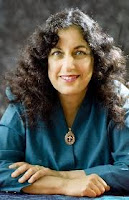
I am honored to showcase the wonderful poet, author, and literacy advocate Pat Mora.

First, a bit of background:

Pat Mora was born on January 19, in El Paso, Texas, and grew up in a bilingual home. Both her maternal and paternal grandparents migrated from Mexico to El Paso to escape the revolution in the early 20th century. Mora went on to earn both her bachelor’s and master’s degrees from Texas Western College, now the University of Texas at El Paso. She taught English at the secondary and college levels and briefly hosted a radio talk show. She worked as an administrator, lecturer, and activist, and gives poetry readings, workshops, and presentations around the world. She continues her efforts as a literacy advocate in promoting Día de los Ninos, Día de los Libros (Children’s Day/Book Day) held on April 30th, a national day to celebrate children and literacy. She is married and the mother of three grown children. Her hobbies include traveling, reading, walking, and visiting with friends and family.

Pat Mora’s work has garnered many awards and recognitions, including a Kellogg National Fellowship, a National Endowment for the Arts Fellowship, the Cooperative Children’s Book Center Choices Award, inclusion on the Americás Award Commended List, an International Reading Association Notable Books for Global Society distinction, and the Tomás Rivera Mexican American Children’s Book Award, among others.

Pat Mora has written in a variety of genres including poetry for children and adults, nonfiction, and children's picture books, including Tomás and the Library Lady (Knopf, 1997), Confetti: Poems for Children (Lee & Low Books 1996/1999), and My Own True Name: New and Selected Poems for Young Adults (Arte Público Press 2000). Many of her works are written in two languages (English interwoven with Spanish words and phrases), and in bilingual editions. She also has a terrific web site and blog (ShareBookjoy) that is frequently updated and full of inspiration and information.

INTERVIEW
We often talk about your poetry, but I so admire your teaching and advocacy too. Since we’re preparing for the upcoming NCTE conference for teachers, I’d like to focus on your new resource book, ZING. Can you tell us a little about the inception of ZING?

Pat: Thanks for asking! Zing! Seven Creativity Practices for Educators and Students began from requests from educators at all levels who would ask me on my speaking travels to tell them how I write, what is my process. Often, the teachers, professors and librarians confided that they wanted to do what I do. I was in two Texas cities last month, and on both trips, I again was asked, “Why don’t you write a book to help us do what you do?”

“I’ve written that book,” I responded which surprised them. A challenge for almost all authors is how to connect potential readers with the books we write for them. Among my numerous goals for this book were inspiring educators to develop their own creativity and inspiring them to develop the creative potential of all their students—a tall order, I know. I firmly believe in the power of educators and that most are committed professionals. I so enjoyed writing these fourteen letters to them.

You weave together so many wonderful vignettes, quotes, and observations, along with practical steps, it’s an inspiring “handbook.” Which tip or strategy do you find you most often use yourself?

Pat: At this point in my life, my key challenge remains creating the quiet to write—and I’m alone most of the time! It remains hard to detach from e-mails and especially hard to detach for a while from growing Día as we edge up to its 15th Anniversary in April. I’m so committed to the need to reach out to diverse families and to assist them to be literacy promoters in their homes and communities. I also, though, need to remind myself that to continue writing (and there are still plenty of books I hope to write), I need the stillness to explore. “Life” gobbles up our hours and days, doesn’t it?

I’m also a BIG fan of your new poetry book, DIZZY IN YOUR EYES. The blending of perspectives is particularly unique—love through the eyes of teens, of course, but also via people of all ages and all walks of life—a cross-generational love poem anthology, if you will. Would you consider doing something like that again on another theme? If so, which theme might draw you in?

Pat: Both of my books for teens were suggested by librarians when I was actually focused on other projects. I clearly remember when the books were proposed. MY OWN TRUE NAME was suggested by a California librarian who said she needed a poetry collection in a Latina/o voice for her students. I felt a responsibility to help and spoke to the publisher of Arte Público Press.

Over a delicious dinner hosted by Random House at TLA, a librarian said that I need to write another book for teens, and that she recommended love poems. I’d never considered such a thing, but the idea grew on me, and the project brought me great joy. I’m deeply grateful to my Knopf editor for believing in the project. I’m not planning another such book at present which relates to your following question.

What can we look forward to from you next?
Pat: I’m always working on picture books. I find them irresistible. Although poetry is my favorite genre, it’s difficult to place a poetry collection and the audience for poetry can be small. For a while I wondered if I’d even write another book of adult poetry, but I do now have an idea for book seven. No idea presently for another book of teen poetry, but I do hope to begin a YA version of my family memoir House of Houses before the end of the year.

Please chime in with questions or comments (below) and Pat will respond at the end of the week. Plus, I'll chime in again with a few more ideas and activities. Stay tuned...

And if you can make it to the NCTE conference, join us!
Session Title: A.9 Poets and Bloggers Unite: Using Technology to Connect Kids, Teachers, and Poetry
Date: Friday, November 19th
Time: 9:30 am to 10:45 am
Place: Coronado - Baja Room


Photo Credit: Cheron Bayna