Showing posts with label peace. Show all posts

Friday, October 21, 2011

Poetry, peace and USBBY

This weekend I’m in Fresno, California attending the biennial IBBY regional conference with the theme, Peace the World Together Through Children’s Books. It’s sponsored by the US section of IBBY (the United States Board on Books for Young People), one of my favorite organizations since it’s devoted to international children’s literature. I’ve mentioned it many times, particularly since I love this conference and rarely miss it. In addition, I am winding up my 3 year term as co-editor of the IBBY journal of international children’s literature, Bookbird.

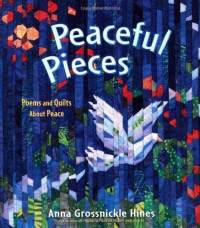
I will also be making a presentation on Saturday, “PEACE THROUGH POETRY FOR YOUNG PEOPLE” along with poet and artist Ann Grossnickle Hines, author of the recent poetry collection, Peaceful Pieces: Poems and Quilts About Peace. Our session will focus on how poetry, in particular, fosters the IBBY vision of working toward a more just and peaceful world by featuring:

• An introduction to and bibliography of poetry for young people from around the world, including print and online resources
• Poetry in bilingual editions (English and Spanish, Japanese, Irish, Slovakian, etc.)
• Poems and poets from around the world featured in Bookbird

Anna will talk about her new book which has already received starred reviews in Publisher’s Weekly and Booklist, Peaceful Poems, a collection of 28 short poems about peace, a broad concept interpreted in varied ways through poetry and quilt art. She notes, “All of us are together in one world, where everything we do, every action, every thought and every breath, creates the network in which we all live.”

It’s a beautiful book—in both the quilt art illustrations and the various manifestations of peace that the poems reflect. Here’s just one example:

Peace: A Recipe
By Anna Grossnickle Hines


Open minds—at least two.

Willing hearts—the same
.
Rinse well with compassion.

Stir in a fair amount of trust.

Season with forgiveness.

Simmer in a sauce o
f respect.
A dash of humor brightens the flavor.


Best served with hope.


And just in case you’re interested in the bibliography I’ll be sharing, here you go:

POETRY BOOKS FOR YOUNG PEOPLE ABOUT WAR AND PEACE, ETC.
Applegate, Katherine. 2008. Home of the Brave. New York: Square Fish.
Burg, Ann. 2009. All the Broken Pieces. NY: Scholastic.
Crist-Evans, Craig. 1999. Moon Over Tennessee: A Boy’s Civil War Journal. Boston: Houghton Mifflin.
Engle, Margarita. 2006. The Poet Slave of Cuba: A Biography of Juan Francisco Manzano. New York: Henry Holt and Co.
Engle, Margarita. 2008. The Surrender Tree; Poems of Cuba’s Struggle for Freedom. New York: Henry Holt.
Frost, Helen. 2009. Crossing Stones. New York: Farrar, Straus & Giroux.
Gordon, Ruth, comp. 1995. Pierced by a Ray of Sun: Poems about the Times We Feel Alone. New York: HarperCollins.
Greenfield, Eloise. 2006. When the Horses Ride by: Children in the Times of War. New York: Lee & Low Books.
Gunning, Monica. 2004. A Shelter In Our Car. San Francisco, CA: Children’s Book Press.
Heard, Georgia. 2002. This Place I Know: Poems of Comfort. Cambridge: Candlewick Press.
Hesse, Karen. 2003. Aleutian Sparrow. Simon & Schuster.
Hines, Anna Grossnickle. 2011. Peaceful Pieces: Poems and Quilts About Peace. New York: Greenwillow.
Holland, Trish and Christine Ford. 2006. The Soldiers’ Night Before Christmas. New York: Random House.
Hopkins, Lee Bennett. 2008. America at War. New York: McElderry.
Hopkins, Lee Bennett, comp. 1994. Hand in Hand: An American History through Poetry. New York: Simon & Schuster.
Hopkins, Lee Bennett, comp. 2002. Home to Me: Poems Across America. New York: Orchard Books.
Janeczko, Paul. 2011. Requiem; Poems of the Terezín Ghetto. Candlewick.
Johnston, Tony. 2008. Voice from Afar: Poems of Peace. New York: Holiday House.
Katz, Bobbi. 2000. We The People: Poems. New York: Greenwillow.
Lai, Thanhha. 2011. Inside Out and Back Again. HarperCollins.
Levy, Debbie. 2010. The Year of Goodbyes; A True Story of Friendship, Family and Farewells. New York: Hyperion.
Lewis, J. Patrick. 2005. Heroes and She-Roes: Poems of Amazing and Everyday Heroes. New York: Dial Books.
Lewis, J. Patrick. 2007. The Brothers’ War: Civil War Voices in Verse. Washington: National Geographic Children's Books.
LeZotte, Ann Clare. 2008. T4. Boston: Houghton Mifflin.
Longfellow, Henry Wadsworth. 2001. The Midnight Ride of Paul Revere. New York: Handprint Books.
Meltzer, Milton. 2003. Hour of Freedom: American History In Poetry. Honesdale, PA: Wordsong.
Nye, Naomi Shihab. 1998. The Space Between out Footsteps: Poems and Paintings from the Middle East. New York: Simon & Schuster.
Nye, Naomi Shihab, comp. 1999. What Have You Lost? New York: Greenwillow.
Rappaport, Doreen. 2008. Lady Liberty. Cambridge: Candlewick Press.
Robb, Laura, comp. 1997. Music and Drum: Voices Of War and Peace, Hope and Dreams. New York: Philomel Books.
Sidman, Joyce. 2007. This is Just to Say: Poems of Apology and Forgiveness. Ill. by Pamela Zagarenski. Boston: Houghton Mifflin.
Thomas, Shelley Moore. 1998. Somewhere Today: A Book of Peace. Morton Grove: Albert Whitman.
Vecchione, Patrice. 2007. Faith and Doubt; An Anthology of Poems. New York: Henry Holt.
Volavkova, Hana, ed. 1993. I Never Saw Another Butterfly: Children’s Drawings and Poems from Terezin Concentration Camp 1942-1944. New York: Schocken Books.
Walker, Alice. 2007. Why War is Never a Good Idea. New York: HarperCollins.
Yolen, Jane. 1996. Sacred Places. San Diego, CA: Harcourt Brace.

I'll also be sharing a bib of a sampling of wonderful international poetry for kids.

And my major points boil down to these three:
*poetry about peace can teach children about important concepts, events, experiences
*poetry from around the world can humanize other places that may be unfamiliar and provide a bridge of understanding
*poetry (period) encourages reflection, tolerance and peace (poets are lovers not fighters!)

Image credit: 

USBBY;AnnaGrossnickleHines; Greenwillow

Posting by Sylvia M. Vardell © 2011. All rights reserved.

Monday, August 15, 2011

Peaceful Pieces

Next, Terri Lindstrom created the following Readers' Guide for the poetry picture book, Peaceful Pieces.

Bibliography
Hines, Anna G. 2011. Peaceful Pieces: Poems and Quilts About Peace. New York: Henry Holt. ISBN 978-0-8050-8996-7

Recommended Age Levels
Second grade reading level (ages 7-8). This book appeals to all ages.

Summary of Book
Hines used the beautiful artistry of her quilting as an inspiration for this book of poems honoring peace. Using a variety of poetry styles and quilting patterns, Hines relates that peace can be found in the quietness of being alone, with family, the outdoors, or even in the darkest of days, such as fighting with a sibling and in war. People of all ages will appreciate the creative way Hines intertwines her talents as poet and quilter. The vibrant colors of the quilts serve as backdrops that span each page from top to bottom and compliment the poem on that page. At the end, the author offers a short introduction to the famous peacemakers that inspired one of the quilts, and explains how she connects the quilts and poems to tell a story of emotions. Peaceful Pieces: Poems and Quilts about Peace encourages the reader to find peace within themselves and in the world around them.

Review Excerpts
1. “The most striking aspect of the book is its quilted, pieced-cloth artwork, and the borderless pages allow maximum impact for Hines’ bold, expressive visual statements.”
~Booklist
2. "Hines' art is always beautiful; she illustrates her work with astonishing quilts, reproduced full-size, in a variety of designs: In this work she uses black-and-white reverse patterns, mosaic-type images, photographs made into quilt patterns and lots and lots of gorgeous color."
~Kirkus Reviews
3. “Using exquisitely detailed handmade quilts as a backdrop, Hines's poems explore the overarching themes of peace, understanding, tolerance, and friendship.”
~School Library Journal

Questions to Ask Before Reading
These questions are in an order designed to assist in introducing the book.
1. Hold up a quilt. Does anyone know what this is? Show several quilts with different patterns and discuss the patterns, explaining that the patterns convey a meaning. If you have common patterns and need help identifying them Womenfolk.com (http://www.womenfolk.com/quilt_pattern_history/) is a good resource.
2. Explain that quilts are made by stitching layers of fabric together to create a pattern or story.
3. Do you like poetry? What is poetry? What is your favorite poem?
4. Does anyone have ideas as to how quilts and poems could be alike? Different?
5. What is peace? Who do you think of when you hear the word peace? Why do you think of that person?
6. Do you think people can find peace even when they might be fighting with their brother or sister? Mad at their parents? What about when you are in trouble? Lonely? Sad? Happy?

Suggestions for Reading Poems Aloud
These are several ideas showing how to share the poems in the book.
1. Using any poem from Peaceful Pieces: Poems and Quilts about Peace, group students together to read and act out that poem. Throughout the week provide time for groups to collaborate on presenting other poems they enjoyed reading either as a class, group, or independently.
2. Choose a familiar tune and read one of the poems to that tune. Then have students do the same with a tune of their choice. For example, use the tune of The Mulberry Bush nursery rhyme to read Hines’ poem Big Shoes.
3. Students can set up a train of dominoes as they recite the poem Dominoes. When the student gets to the end of the poem, as they say the words they can touch the last one and cause a “domino effect”.
4. While reading What if?, use the examples in the poem as you read; blow bubbles, fire a marshmallow gun, and throw feathers in the air.
5. Partner students to read the poem Peace Sign. Alternate reading the lines. This will give one reader only the word peace to read. Switch lines. Reread the poem numerous times switching which partner says peace. Try saying the word peace in a variety of tones: whisper, shout, and giddy are just a few.

Follow Up Activities
Several activities are listed here to continue the study of peace, poetry, and quilting.
Writing
1. Students pick their favorite poem from the book and discuss with a partner what the poem means to them, why they chose it, and what they like about it. Then have each student write about their choice in their poetry journal focusing on text to self, text to text, and/or text to world relationships with the poem.
2. Begin a favorite poem response board. Have students write their favorite poem title and author, why they like it and ask them to illustrate its meaning. Then post them on a bulletin board surrounding a particular theme, in this case Peace. Change the theme every two weeks to keep kids reading, responding, and sharing poetry.
3. Students arrange magnetic words into their own poem. Then write the poem in their journal with an illustration.

Music
1. Play several peace themed songs with lyrics and have the students relate the song to a particular poem in the book. The student should be able to explain why they chose that poem to connect to the lyrics. Examples of songs with the lyrics are:
a) Let it Be by The Beatles
http://www.youtube.com/watch?v=bdMBdYVWvKw&feature=related
b) Peace in Our Time by 10cc (religious)
http://www.youtube.com/watch?v=gvfQIwciVdI
c) I’ve Got Peace Like a River by Heritage Singers
http://www.youtube.com/watch?v=1NlZO57W0eE
d) We are the World by Michael Jackson
http://www.youtube.com/watch?v=io9TYzVt3-g&feature=related
e) What a Wonderful World by Louis Armstrong
http://www.youtube.com/watch?v=A3yCcXgbKrE&feature=related

Social Studies
1 Research the history of quilting.
2. Research prominent peacemakers from around the world.

Art
1. Make a paper classroom quilt. Directions can be found at http://www.eduplace.com/act/quilt.html. This will help foster tolerance of one another.
2. Make a class peace quilt. Have children create a block piece for the quilt that represents their understanding of peace. Then have each child connect their block piece to someone else’s until a quilt is made. The quilt can be used in the reading area or hung on the wall as a reminder that we are individuals that make up a group that has to learn to get along. This video explains how to use Oriental Trading Company’s product to make a quilt. http://www.youtube.com/watch?v=9X4jBk40yTY
3. A fun recess/art activity: After reading several poems as a class and individually, students can use sidewalk chalk to illustrate their favorite poem. This could be done in a predetermined pattern to be a quilt of favorite poems.

Community Connections
1. Invite a quilt maker to class to explain and demonstrate how quilts are made.
2. Using a list of poets with poems suitable for children, have students dress like their favorite poet and read poetry from that poet. This is could also be done as a poetry presentation for parents.

Poetry Centers
1. Listen to poetry on tape or CD.
2. Play poetry games on the internet.
3. Provide a variety of poetry books of different subjects, styles, and authors for the students to read.
4. Match poems with photographs from magazines.

Related Web Sites
Many websites are listed here under the categories for kids, listening to poems, and teacher resources.

Kid’s Web Sites

Anna Grossnickle Hines
http://www.aghines.com/
(The author’s page explains how she uses quilting to create her poems.)

Breaking Down the Walls
http://library.thinkquest.org/CR0212302/index.html
(This website has classroom activities and student games teaching them about peace and how to be tolerate of other cultures.)

The International Kids Club
http://www.planetpals.com/IKC/
(This website offers activities about peace.)

Game Goo
http://www.earobics.com/gamegoo/games/wiznpigs/wiznpigs.html
(This is a game using alliteration, rhyme, rhythm.)

Poetry to Listen to Online
The Children’s Poetry Archive
http://www.poetryarchive.org/childrensarchive/home.do

Starfall
http://www.starfall.com/n/level-b/poetry/load.htm?f

Peace Kids
http://www.peacekids.net/

Teacher Resource Sites
Anna Grossnickle Hines
http://www.aghines.com/
(The author’s page offers several follow up activities.)

ABC Teach
http://abcteach.com/directory/theme_units/peace/
(This teacher’s website offers a wide variety of activities to do with students.)

International Day of Peace
http://www.internationaldayofpeace.org/
(This website can be used to gain information about this day to share with students.)

Read Write Think
http://www.readwritethink.org/classroom-resources/lesson-plans/peace-poems-picasso-doves-93.html?tab=4#tabs
(This site offers lesson plans on a variety of topics. The one chosen here is created by Judi Moreillon using The Big Book for Peace ISBN 0525446052)

Poem Hunter
http://www.poemhunter.com/poems/peace/
(This is a great way to find poems quickly on any topic.)

Women Folk
http://www.womenfolk.com/quilt_pattern_history/
(This website explains the variety patterns of quilting and gives a history of quilting.)

Oriental Trading Company (You Tube)
http://www.youtube.com/watch?v=9X4jBk40yTY
( A video that explains how to use a product from the Oriental Trading Company to make a simple classroom quilt.)

Poetry Teachers
http://www.poetryteachers.com/
(This website has a multitude of ideas for sharing poems with children.)

Related Books
In this section several pieces of literature are listed.
Quilt Poetry
1. Hines, Anna G. 2005. Pieces: A Year in Poems and Quilts. New York: Greenwillow Books. ISBN 1590783522
2. Hines, Anna G. 2005. Winter Lights: A Season in Poems and Quilts. New York: Greenwillow Books. ISBN 0060008172
3. Wassenhove, Sue V. 2008. The Seldom-Ever-Shady Glades: Poems and Quilts. Honesdale, PA: Wordsong. ISBN 0688169635

Fiction Books with Quilts
1. Bourgeois, Paulette. 2003. Oma’s Quilt. Ill. by Stephane Jorisch. Tonawanda NY: Kids Can Press. ISBN 9781553376255
2. Brumbeau. Jeff. 2001. The Quiltmaker’s Gift. Ill. by Gail De Marcken. New York: Scholastic Press: ISBN 0439309107
3. Coerr, Eleanor. 2010. The Josefina Story Quilt. Ill. by Bruce Degen. Pine Plains, New York: Live Oak Media. ISBN 1430108169 and 13- 9781430108160 with CD
4. Flournoy, Valeria. 1985. The Patchwork Quilt. Ill. by Jerry Pinkney. New York: Dial. ISBN 0803700970
5. Hopkinson, Deborah. 1995. Sweet Clara and the Freedom Quilt. Ill. by James Ransome. New York: Drangonfly Books. ISBN 0679874720.
6. Johnston, Tony. 1996. The Quilt Story. Ill. by Tomie de Paola. New York: Puffin. ISBN 0698113683
7. Kurtz, Shirley. 2001. The Boy and the Quilt. Ill. by Cheryl Benner. Beaverton, Oregon: Good Books. ISBN: 1561480096
8. Love, D. Anne. 1996. Bess’s Log Cabin Quilt. Ill. by Ronald Himler. New York: Yearling. ISBN 0440411971
9. Polacco, Patricia. 2001. The Keeping Quilt. New York: Aladdin Paperbacks. ASIN B004ACAHJ8
10. Root, Phyllis. 2003. The Name Quilt. Ill. by Margot Apple. Phoenix: Farrar, Straus & Giroux. ISBN 0374354847

Fiction Books about Peace
1. Durell, Ann. 1990. The Big Book for Peace. Ill. by Marilyn Sachs. Boston: Dutton Juvenile. ISBN 0525446052
2. Jackson, Jill and Miller, Sy. 2009. Let There Be Peace on Earth: And Let It Begin with Me (Book & CD) Ill. David Diaz. New York: Tricycle Press. ISBN 9781582462851
3. Millman, Dan. 1991. Secret of the Peaceful Warrior. Ill. by T. Taylor Bruce. Tiburon, CA: H J Kramer, Inc. ISBN 0915811235
4. Parr, Todd. 2004. The Peace Book. New York: Little, Brown and Company. ISBN 0316835315
5. Vega, Elizabeth. 1995. The Laughing River. Ill. by Ashley Smith. Windsor, CA: Rayve Productions. ISBN 1877810355
6. Vladimir, Radunsky. 2003. What does Peace feel like? New York: Atheneum. ISBN 0689866763

Biographies of Famous Peacemakers
1. Aaseng, Nathan. 1992. The Peace Seekers: The Nobel Peace Prize. Minneapolis: Lerner Publishing Group. ISBN 0822596040
2. Adler, David. 1991. Picture Book of Marin Luther King, Jr. Ill. by Robert Casilla. New York: Holiday House. ISBN 0823408477
3. Eddy, Susan. 2003. Mother Teresa (Rookie Biography). New York: Scholastic. ISBN 051627922X
4. McDonough, Yona. and Zeldis, Malcah. 2006. Peaceful Protest:The Life of Nelson Mandela. Ill. by Malcah Zeldis. New York: Walker Childrens. ISBN 080278948X
5. Mitchell, Pratima. 1997. Gandhi: The Father of Modern India. Ill. by Mrinal Mitra. New York: Oxford. ISBN 019521434X
6. Ryan, Pam M. 2002. When Marian Sang. Ill. by Brian Selznick. New York: Scholastic. ISBN 9780439269674
7. Venezia, Mike. 2008. Jimmy Carter: Thirty-Ninth President 1977-1981 (Getting the Know the US Presidents). Ill. by Mike Venezia. Danbury, CT: Children’s Press. ISBN 0516259717

About the Author
“Like these art quilters, I wanted to make quilts that would express concepts, tell stories, and give a visual image to my poems.”
~ Anna Grossnickle Hines

Since crafting her very first quilt for her mother, Anna G. Hines has continued to quilt to creatively express her thoughts. She scanned fabric after fabric looking for just the right pieces to create her fifth book, Peaceful Pieces using quilt patterns for the book’s illustrations. These days Hines makes quilts primarily to design illustrations for her poetry books. A previous quilt poem book, Pieces: A Year in Poems and Quilts, Greenwillow Books, 2001 won many awards. She has written and illustrated over 40 books, including eight Curious George books, and has plans to write and illustrate many more.

This guide is used with permission of Terri Lindstrom.

Monday, April 18, 2011

PEACEFUL PIECES by Anna Grossnickle Hines


Poetry Tag continues with a book review of a new book of poetry connected to yesterday's book review.

Today’s tagline: Poetry about peace

Guest Reviewer: Jan Kirkland

Featured Book: Hines, Anna Grossnickle. 2011. PEACEFUL PIECES. New York: Henry Holt. ISBN 978-0-8050-8996-7

Jan writes: Hines has assembled a collection of poems and illustrations of handmade quilts about peace. Peace is addressed in a variety of situations from the universal scale to the individual. At the book’s end there is a two-page spread on “The Peacemakers” offering biographical information of each individual represented on the quilt for the poem, “Big Shoes.” This section is followed by “Peaceful Connections” describing the process of quilt making.

This book of 28 poems offers a variety of styles from free verse, an acrostic poem, poems of form using a variety of print sizes, spacing, and boldness of print, as well as length, including a one line poem, and there is shape in the poem “Pass it On” where the words encircle the earth.

The book opens with the idea of how peace will come on drums, with trumpets blaring, waving banners, or by one lone flute, calmly. “Where I Live” provides a definition of peace inviting the reader to experience the complexity and fullness of peace. There is a recipe for the essential ingredients of peace. Feelings are drawn upon in the humor of making peace while standing nose to nose with a sibling, or the pull of heartstrings as a young boy yearns for his soldier daddy to be the laughing daddy he remembers. We feel the awe and wonder of the contributions of the peacemakers, and the poem, “Dominoes” helps us to have a sense of connectedness with other people.

Strong imagery is evident throughout this wondrous book and is beautifully represented in “Reruns” where angry thoughts are exploding in the brain. Words are set against a background quilt of vivid blues and purples with brilliant red firecracker bursts. Picture the words of “What If?” /What if angry words/vanished like/soap bubbles/and punches landed light/as butterfly kisses? /What if guns/fired marshmallow bullets, and bombs burst/into feather clouds/. Angry words engage the senses becoming concrete objects that may be seen, felt, and tasted.

For those who know something about quilting, they will immediately appreciate the beauty and artistry of the quilt pieces. Others will have their eyes opened to a unique art form that captures the richness and detail of an artist’s brush with stitches. Vivid colors cover the entire color spectrum from the softness of dappled light on a pond to the vibrant colored thoughts exploding in the brain. Artistry of words meets artistry of fabric. Hines has made an exquisite contribution with this work.

Poem sample:

Where I Live
by Anna Grossnickle Hines

Where I live the breeze
blows gently across the pond,
the sky is clear and blue,
trees grow tall,
and the song of birds floats in the air.
Where I live people talk instead of fight,
listen instead of talk,
respect and honor differences.
Where I live the hungry are fed,
the sick healed,
the lost returned
safe to their homes.
Where I live there is laughter
and song
and dance.
Where I live there is a stillness,
an openness,
a space for ideas to be born.
Where I live there is no need of fear.
Where there is no fear I live.
Where I live is as big as your heart
and as small as the universe.
I am peace.
Will you have me live with you?

Connections
This poem invites the reader to think about many of the actions required to have peace such as talking, listening, helping others, acts of kindness, laughing, singing, and dancing. In other words, we must be an active influence in the world around us to foster peace.

In the hallway of the school, a large quilt mural titled “Promoting Peace” could be displayed. For a six weeks period or perhaps a semester, all of the school’s various grade levels would actively contribute to the idea of promoting peace and then displaying their contributions through photographs or artwork on the hallway mural. Artwork could be done on quilt size blocks to be pieced together creating a school quilt at the end. Other possible peace-building activities include:

• One grade may choose to collect canned food/clothing for the poor.
• Field trips might be made to nursing homes where students could do poetry readings, drama, sing or dance.
• Respecting others by inviting individuals of varied cultures to share, helping students learn what makes the different cultures unique.
• Creating a buddy system to provide support to a newcomer to the school.
• Practicing active listening in classroom discussions and learning the value of hearing others’ ideas.

Students could write about the class activities in promoting peace at the end of the project and have them included in a school newsletter.

Tomorrow’s tagline: Poetry about expressing oneself through art

[We’re now more than halfway through Poetry Month—still time to grab a copy of PoetryTagTime, an e-book with 30 poems, all connected, by 30 poets, all connected and downloadable right now at Amazon for your Kindle or Kindle app for your computer, iPad or phone. Just 99 cents.]


Image credit: Henry Holt; PoetryTagTime

Posting (not poem) by Sylvia M. Vardell and students © 2011. All rights reserved.

Friday, August 08, 2008

New Review: POETRY PUDDING

As the Summer Olympics begin on this auspicious date, 08/08/08, our attention is focused across the globe. I thought it might be appropriate to spend a moment on an international poem collection, Poetry Pudding, from New Zealand. I first found out about this gem from a CHILD_LIT listserv posting this spring. The Storylines Children’s Literature Trust selects an annual list of New Zealand’s notable books for children chosen by a panel of children’s literature professionals including past and present members of the Storylines management committee, all of whom have a wealth of experience and knowledge in the field of children’s literature. Many have served as judges for the New Zealand Post Book Awards (and its previous incarnations) and the LIANZA children’s book awards.

The list (launched in 1999) comprises 10 books in each of four categories – picture books, junior and young adult fiction and nonfiction. These books represent the very best books for young people published in New Zealand during the previous year (2007).

Of course I peruse every “best” list for the inclusion of poetry, thus I was so pleased to find one title in the “Young Adult Fiction” category:
Poetry Pudding: A Delicious Collection of Rhyme and Wit edited by Jenny Argante, illustrated by Debbie Tipuna, published by Reed, now Raupo Publishing

I immediately went online to get myself a copy which was a bit more challenging than I expected, of course. Eventually, I ordered it through Raupo directly and was so excited to get my very own copy from across the planet. (I LOVE seeking out poetry from countries outside the U.S., particularly when it’s in English.)

Poetry Pudding did not disappoint. Its small trim size (roughly 4.5 x 6.5 inches) is fun and handy, easy to tote and tuck into a bookbag, purse, or pocket, and it contains over 100 poems from 44 contributors from some of New Zealand’s best and most interesting poets: Cliff Fell, David Hill, Jack Ross, James Brown, Paula Green, Jessica Le Bas, James Norcliffe, and many others. In her introduction, Jenny Argante explains that her aim was to collect poems by “Kiwi poets for Kiwi kids” organized around the alphabet, A to Z, but it didn’t quite work out. She writes, “In poetry… where you start from is not as important as where you end up” (p. 11). Love that line! The selections represent an amazing range, including poems by Maori poets. I found it impossible to select just one example, so I’ll be posting my favorites over the next three days, just for fun. Here are three gems to show the contrast in tone, style, and form in this excellent anthology.

Keeping the Peace
by Lee Dowrick


Peace

is hard to keep

if you’re a lion
at heart.


You will need to know

when not to roar.


when to stay in your den,

and how

to lie quietly

beside

a tempting lamb.


p. 45


List
by Philippa Werry


eggs

cheese

margarine

frozen peas

frozen beans


bread

coffee

marmalade

jelly! toffee!
lemonade!


popcorn!

pizza!

cheerios!

pasta and

pistachios!


corn chips!

cornflakes!

pink iced buns!

chocolate! cheesecake!

bubblegum!


peaches!

cherries!

nectarines!

hokey-pokey

ice cream!

Hey, just a minute,
what’s all this?

Who’s been writing

on my shopping list???


p. 114-115


The Long-Wait Queue
by Tracey Bingham


High I.Q.

Low I.Q.

We all still queue

in the long-wait queue.


In the bus queue

the tip-top queue
the lunch queue
the chip-shop queue.

In the grocery queue

the bank queue

the library queue
the endless queue.


High I.Q.

Low I.Q.

We all still queue

in the long-wait queue…

p. 143


Argante, Jenny. Ed. 2007. Poetry Pudding; A Delicious Collection of Rhyme and Wit. Ill. by Debbie Tipuna. Auckland, NZ: Reed Publishing.

I have extensive listings of international poetry for young people in my April 30, 2007 posting. And of course the shining star in this area is Naomi Shihab Nye, who has gathered gorgeous anthologies of poetry by voices around the world, including:
This Same Sky: A Collection of Poems from Around the World (Four Winds Press, 1992)
The Tree is Older Than You Are: A Bilingual Gathering of Poems and Stories from Mexico (Simon & Schuster, 1995)
The Space Between Our Footsteps: Poems and Paintings From the Middle East (Simon & Schuster, 1998) [adapted as The Flag of Childhood: Poems from the Middle East (Aladdin, 2002)]

Poetry Friday is hosted by my former student, Becky Laney, this week at Becky's Book Reviews. Go, Becky!

P.S. My apologies for being AWOL last Friday. I was being checked by the SpamBlocking police at Blogspot and finally passed muster! :-)

Picture credit:
mairangibay.blogspot.com

Tuesday, April 08, 2008

Happy anniversary, U.N.

On this day in 1946 the United Nations assembled for the first time. According to the U.N. Web site, “The name "United Nations", coined by United States President Franklin D. Roosevelt, was first used in the "Declaration by United Nations" of 1 January 1942, during the Second World War, when representatives of 26 nations pledged their governments to continue fighting together against the Axis Powers.” I’ve visited the New York headquarters a few times and always come away impressed and heartened by the history and vision of this body. And the New York site is beautiful, full of large-scale murals and art from around the world, with spacious hallways and meeting rooms full of gravitas. All those people from around the world working against the odds, against the obstacles, to keep communication open. Here’s a poem to celebrate this institution, from the point of view of Eleanor Roosevelt.

The United Nations
Eleanor Roosevelt

Hyde Park, New York, 1947

by Bobbi Katz


I hear Franklin’s words, although he’s at rest.

“Don’t discard the good, when you can’t have the best.”


The President said, “Be my eyes and my ears.”

I looked and I listened for so many years.
I brought the pulse of the nation to our partnership

with what I saw and I heard on each fact-finding trip.


“Peace,” Franklin said, “will need help to endure.

Peace needs a structure. Of that I am sure.”

The United Nations, he thought, could be the way

to work toward world justice and keep war at bay.


I hear Franklin’s words, although he’s at rest.
“Don’t discard the good, when you can’t have the best.”

Now atomic bombs pose a dark new threat.
The need for peace grows more urgent, yet

the United Nations, it’s clear to me,
will be as strong as its members allow it to be.


I hear Franklin’s words, although he’s at rest.
“Don’t discard the good, when you can’t have the best.”


From Katz, B. (2000). We the People: Poems. 1st ed. Illustrated by Nina Crews. New York: Greenwillow Books.

Check out the U.N. “Cyberschool bus” Web site for many interesting teaching ideas and activities.

Picture credit: www.endoilaid.org

Tuesday, April 24, 2007

Poetry and the newspaper

The first American newspaper, the Boston News-Letter, was published by John Campbell, a postmaster, on this day in 1704. It was originally a single sheet of paper printed on both sides and published weekly. One of my favorite poetry-making activities involves using the newspaper as a bank of words, ideas, and print. Kids really enjoy this “building block” approach to poetry and it often provides a bridge to writing for kids who are hesitant or reluctant to try poetry writing. It’s called “found” poetry and is based on taking text from other sources such as newspaper articles, ads, picture books, etc. and converting it into a poem. I enjoy using newspaper articles (or news from the web) since this material is handy and offers current information that is often interesting and relevant to young people. In addition, “mining” poems for words and ideas for a poem helps children process the information and focus on key points for discussion.

This activity can be conducted with the whole group, in small groups, or individually once children are familiar with the process. It begins with choosing a news article (or other text) of interest, then reading it, discussing it, and highlighting and writing the key words and ideas from the piece that seem particularly sharp, interesting, or relevant. From that list of words and ideas, you arrange a poem, eliminating unnecessary words and phrases and inserting a few others, if needed, for sense or meaning. What emerges is often interesting news, plus powerful poetry. Then post the poem along with the news article, and if time allows, a drawing or photograph that the kids choose or create. Here is an example that I created based on this sample news report from the web.

Peace One Day Commitments 2004
As one way of observing the Day, many peace based NGOs and individuals representing a wide variety of religious and spiritual traditions, are observing "International Day of Peace Vigils" with the following objective: "To encourage worldwide, 24-hour spiritual observations for peace and nonviolence on the International Day of Peace, 21 September 2004 in every house of worship and place of spiritual practice, by all religious and spiritually based groups and individuals and by all men, women and children who seek peace in the world." These global 24-hour observations for peace are meant to demonstrate the power of prayer and other spiritual observations in promoting peace and preventing violent conflict. They will also help raise public awareness of the International Day of Peace and can directly support the establishment of a global ceasefire. You can personally support this worldwide initiative by committing to conduct a spiritual observation and promulgating the Vigil idea among religious and peace-based groups in your community.

And here is one possible poem based on the words and ideas of this article that I created as an example. (Obviously, several different poems are possible from one news article, based on the choices each poem “finder” makes.)

Peace One Day

One way
observing the Day
International Day of Peace
encourage
worldwide
24-hour
peace and nonviolence
21 September
in every house of worship
in every place of spiritual practice
individuals
all men, women and children
who seek peace in the world
preventing violent conflict
raising public awareness
support a global ceasefire
this worldwide initiative
begins
in your community.
Peace One Day

Physically cutting and manipulating the words of a newspaper article makes poetry “writing” a bit more concrete for kids who are still learning how to structure phrases, sentences, and poems-- and shows them that poems can come from anywhere—even today’s headlines.

Picture credit: http://www.earlyamerica.com/earlyamerica/firsts/newspaper/